Home / Drainage / French Drain Installation
French Drain Installation in Boise, Idaho
A yard that never dries, water against the foundation or a soggy strip along the fence line usually means water is trapped in the soil. A properly built French drain gives it somewhere to go. We design, install and repair them across the Treasure Valley.
French Drains Explained / 01
What a French Drain Does, and When You Need One
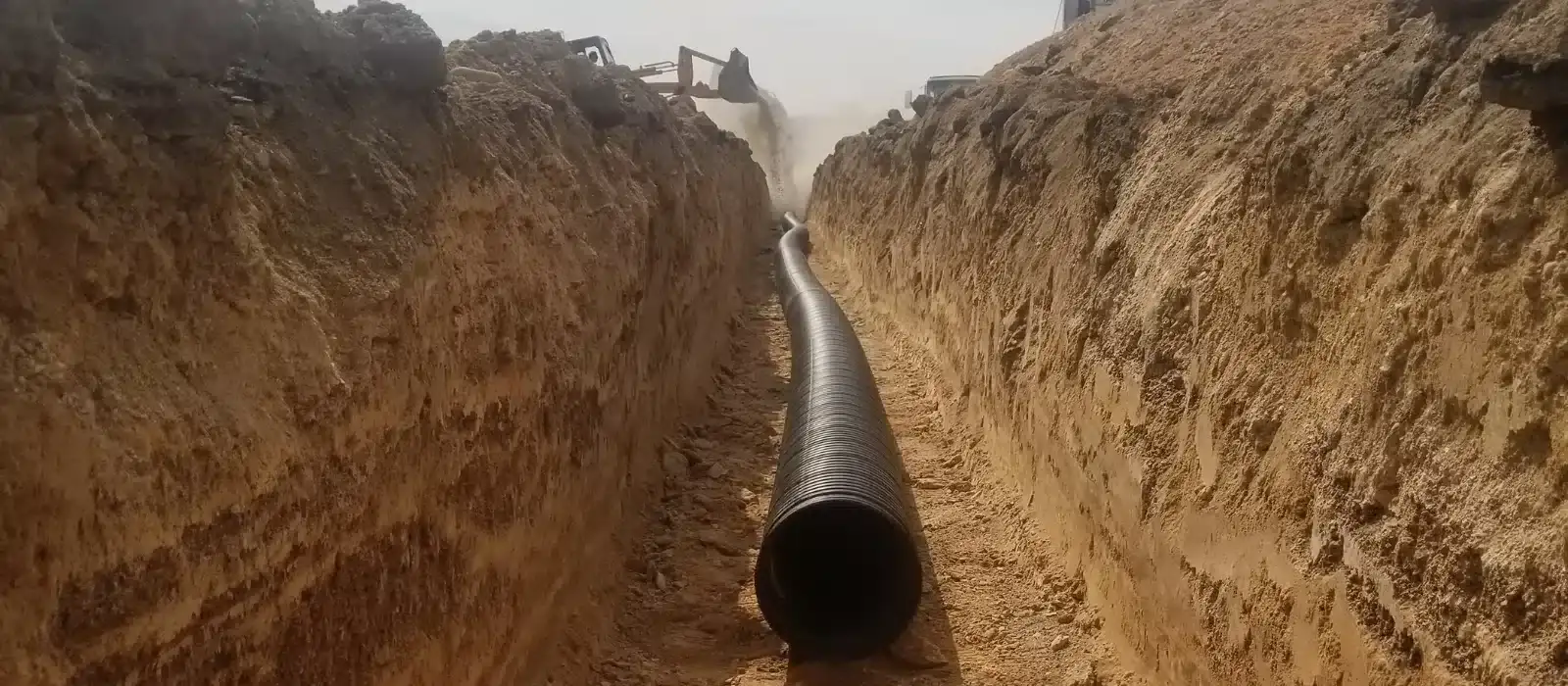
A French drain is a sloped trench filled with washed drain rock around a perforated pipe, wrapped in filter fabric. Water in the surrounding soil takes the easy path into the rock, drops into the pipe and runs downhill to a discharge point. It is the standard fix for water that is in the ground, as opposed to water that is only running across the surface. Some contractors call the same thing drain tile, a trench drain or a perimeter drain.
Shamrock Construction & Excavation has built drainage systems in Idaho soil for over 30 years, and French drains are a large share of that work. These are the signs that tell us one is likely part of the answer:
- Lawn or pasture that stays spongy for days after rain, snowmelt or an irrigation cycle
- Standing water along a fence line, a driveway edge or the low side of the lot
- Damp or musty crawl space, or water marks on basement and foundation walls
- Water seeping out of a slope or a cut bank behind the house
- A wet strip downhill of a neighbor's irrigated ground or a canal
- A septic drain field that stays saturated from groundwater or runoff
Not sure what is causing it? Start with why your yard stays wet, or see everything we build on the drainage services page.
Drain Types / 02
Three Kinds of French Drain We Install
The trench looks similar in every case. What changes is where it goes, how deep it sits and what water it is meant to catch.
Yard French Drains
A shallow drain run through the wet part of a lawn, side yard or pasture to dry out ground that holds water. On flat Treasure Valley lots these are often paired with catch basins at the low spots and with regrading, so surface water reaches the drain instead of ponding above it. Downspouts and sump discharge can be tied into solid pipe alongside so roof water never soaks in to begin with.
Foundation and Perimeter Drains
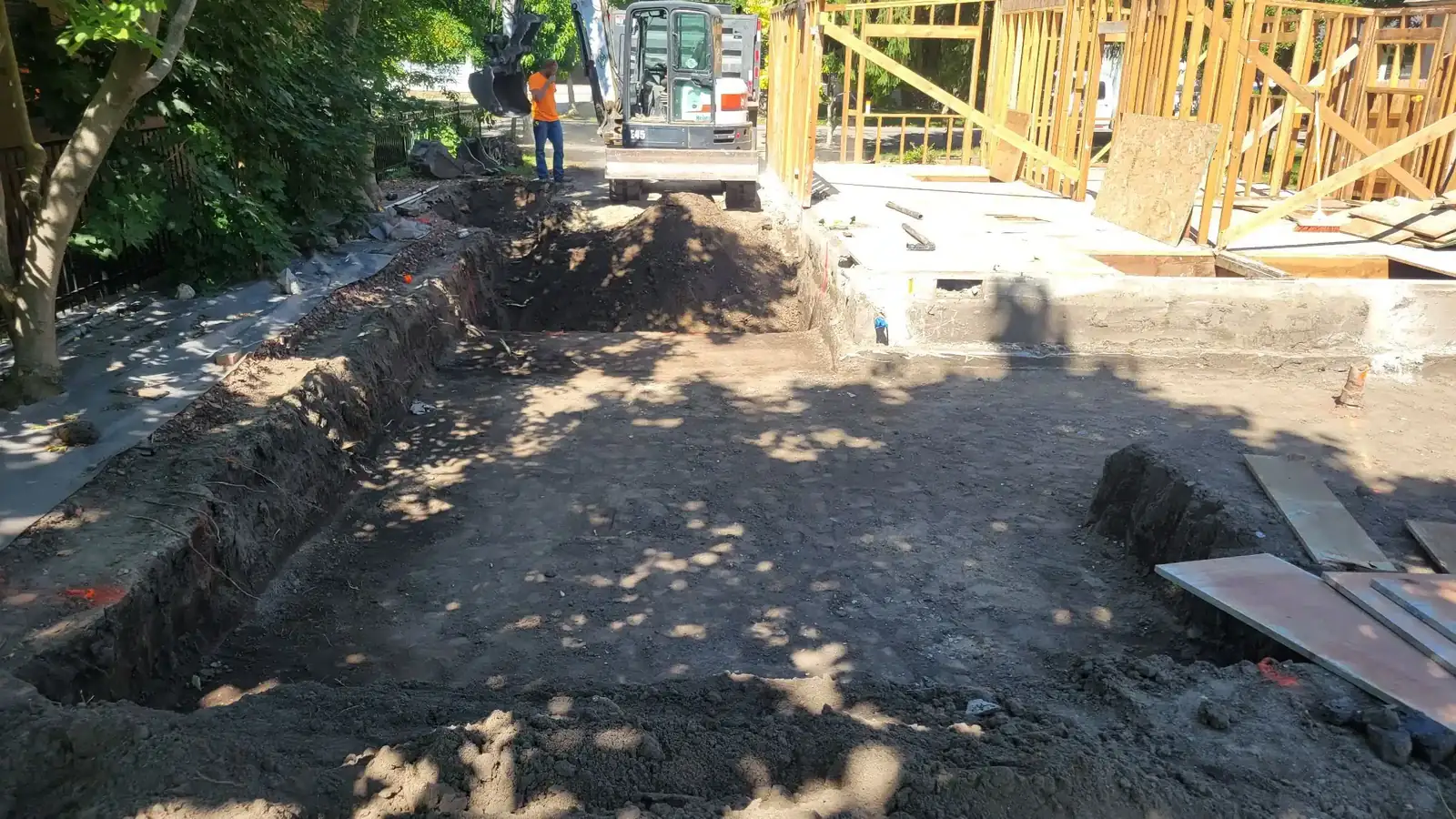
An exterior French drain set next to the footing to intercept water before it reaches the crawl space or basement wall. This is deeper excavation close to the house, so it takes care around utilities, window wells and landscaping. It is the right answer when the foundation stays damp even after the grade and gutters are corrected. Read how poor drainage can damage your foundation for the warning signs.
Curtain Drains
A French drain placed across the slope, uphill of the area you want to protect, to cut off groundwater and seepage before it arrives. Curtain drains are common on foothill lots, below irrigated fields and uphill of septic drain fields. They are covered in more depth in practical drainage solutions for sloped Treasure Valley properties.
Built for Local Ground / 03
French Drains That Hold Up in Treasure Valley Soil
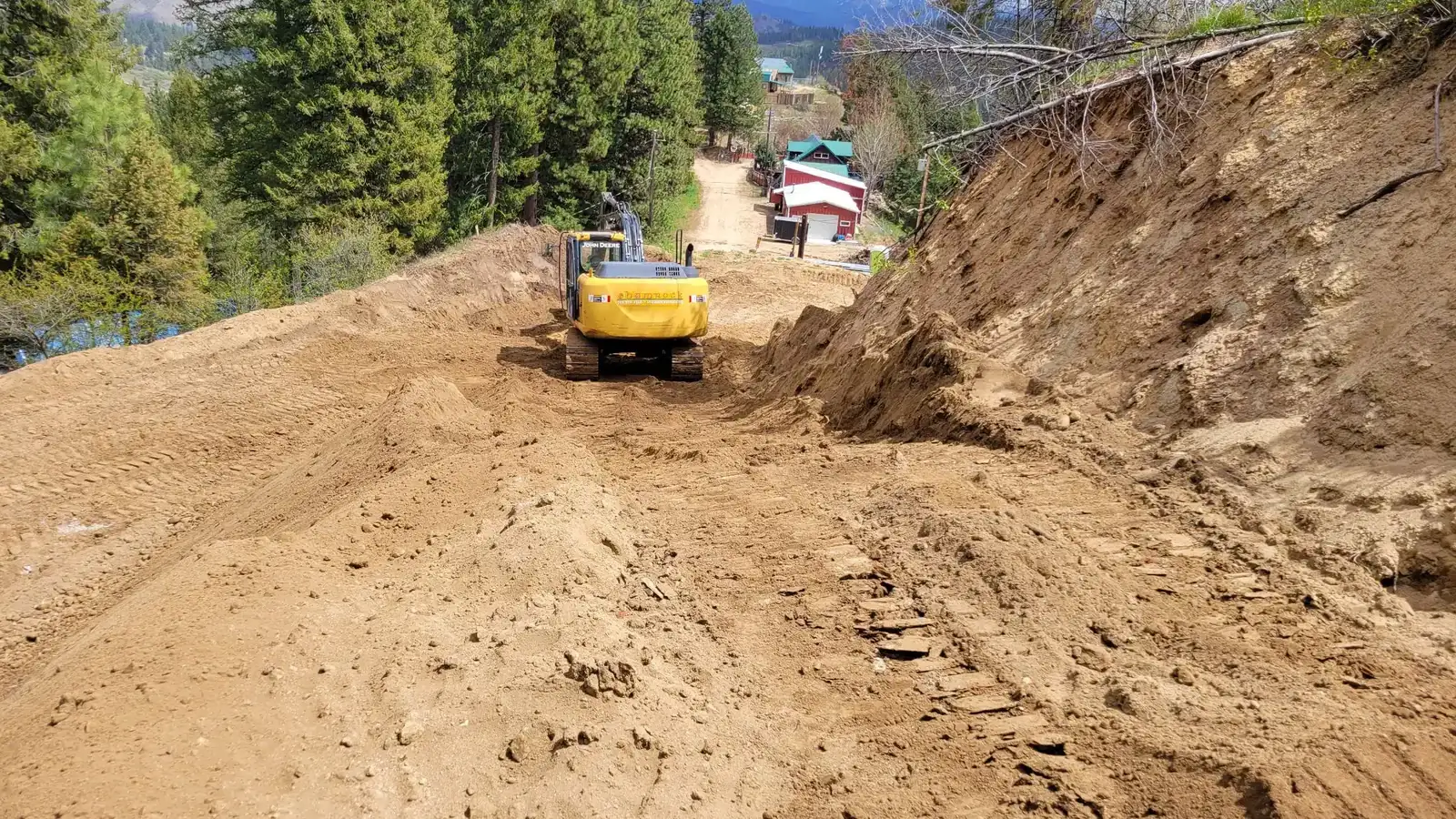
Most failed French drains we dig up were built the same way: a trench, a pipe and whatever gravel was handy. That works for a season or two. Then silt migrates into the rock, the pipe fills and the yard is wet again. Much of the valley sits on heavy clay and old irrigation ground with a seasonal water table pushed up by canals and flood irrigation, and that is hard on a drain that was not built for it.
Here is what goes into one of ours:
- A trench cut to a continuous slope, checked with a laser, so there are no flat spots or bellies
- Non-woven filter fabric lining the trench to keep silt and clay out of the rock
- Clean washed drain rock, not pit-run gravel with fines in it
- Rigid or heavy-wall perforated pipe that will not crush under backfill
- Cleanouts so the line can be inspected and flushed years from now
- Solid pipe from the last perforation to a legal discharge point
- A protected outlet, dry well or sump basin sized for the water the drain will carry
Clay, cobble and groundwater each change the design: how soil type in Idaho affects excavation projects.
How It Works / 04
What to Expect When Shamrock Installs Your French Drain
A French drain only works if it is in the right place and has somewhere to empty. The process is built around getting those two things right before a trench is opened.
1. Call and Drainage Inspection
Call (208) 919-4260 and we come look, ideally while the ground is wet. We check the grade around the house, where downspouts and sprinklers discharge, the soil type and where the water is coming from: the surface, the water table or ground uphill. Then we find where it can legally go. What happens during a drainage inspection walks through the visit.
2. Free Written Estimate
You get a written estimate that shows the route and length of the drain, its depth, the discharge point, any catch basins, sump or regrading that go with it, and the restoration included. Estimates are free. If regrading alone would solve the problem, we say so.
3. Locates and Installation
We call Dig Line 811 for utility locates and get any approval the city, county or irrigation district requires for the discharge. Then we cut the trench to grade, line it with fabric, bed and cover the pipe in washed rock, fold the fabric over the top, and run solid pipe to the outlet. Sprinkler lines we cross are repaired as we go.
4. Backfill, Restoration and Follow-Up
The trench is backfilled and compacted, topsoil and sod go back, and the finish grade is checked so surface water moves toward the drain and away from the house. We show you where the cleanouts and the outlet are. After the next storm or irrigation cycle you will know it works, and if anything needs adjusting we come back.
Pricing / 05
What Affects the Cost of French Drain Installation in Boise
French drain pricing is driven mostly by length, depth and what the trench has to pass through. A shallow run along one soggy side yard with a short path to daylight is a small job. A deep perimeter drain around a foundation, or a flat lot that needs a sump basin and pump because there is nowhere for the water to fall to, is a larger one. Tight access, mature landscaping and a yard full of sprinkler lines add time.
Every French drain starts with a free on-site inspection and a written estimate with the scope spelled out. We work across the valley, and each city has its own ground: see drainage solutions in Boise, Meridian, Eagle, Star, Nampa and Caldwell. Call (208) 919-4260 or request an estimate online.
- Total length of trench and how many runs the property needs
- Depth: a shallow yard drain vs a footing-depth foundation drain
- Discharge: gravity to daylight, a dry well, or a sump basin and pump
- Soil: heavy clay needs more rock and closer spacing than sandy ground
- Catch basins, downspout tie-ins and regrading added to the system
- Access for equipment through gates, side yards and around trees
- Sprinkler lines, utilities, patios and fences the trench has to cross
- Approvals for discharge to a street, storm drain or irrigation lateral
- Restoration of lawn, landscaping and hard surfaces
Common Questions / 06
French Drain Questions, Answered
Do French drains work in clay soil?
Yes, but they have to be built for it. Water moves slowly through the heavy clay found across much of the Treasure Valley, so a drain in clay only pulls water from a narrow band of soil on either side of the trench. That means the trench has to run right through the wet area, it needs more washed rock around the pipe, and the surface usually needs regrading or catch basins so water reaches the drain instead of sitting on top of the clay. A French drain copied from a sandy-soil design is the most common reason we get called to fix one. Our post on how soil type in Idaho affects excavation projects explains why.
Where does the water from a French drain go?
To a legal discharge point, and choosing it is the first design decision. The best option is daylight: a lower spot on your own property where the pipe can empty by gravity. When the lot is flat, the water goes to a dry well, or to a sump basin with a pump that lifts it to a place it can drain. Discharging to a street gutter, a storm drain or an irrigation lateral needs approval from the city, the county or the irrigation district, and sending water onto a neighbor is not allowed. We identify the discharge point during the inspection and handle any approvals as part of the job.
How long does French drain installation take?
Most residential yard drains are trenched, piped, backfilled and restored in one to three working days. A full perimeter drain around a foundation, a system with a sump pump, or a lot with tight access, mature landscaping and a lot of sprinkler lines takes longer. Utility locates through Dig Line 811 take a few days before we can dig, so plan on about a week from signed estimate to start in most seasons. The written estimate gives you a realistic schedule.
How long does a French drain last?
A French drain built with washed rock, filter fabric and a proper slope should work for decades. The ones that fail early are almost always missing something: no fabric, so silt fills the rock within a few years, pit-run gravel with fines in it, pipe laid flat or with a low spot, or no cleanout, so there is no way to flush it. We install cleanouts so the line can be inspected and jetted, and we keep trees and shrubs with aggressive roots away from the run where we can.
Can you repair a French drain that has stopped working?
Often, yes. We start by finding the outlet and running water or a camera through the line. If the pipe is intact and simply silted up, it can sometimes be flushed from a cleanout. A crushed section, a root mass or a buried and blocked outlet can be dug up and replaced on its own. When the rock is packed with silt along the whole run because no fabric was used, cleaning will not bring it back and the drain needs to be rebuilt. See what happens during a drainage inspection for how we diagnose it.
Do I need a French drain, or just regrading?
Sometimes regrading alone solves it, and it is usually the least expensive fix. If the ground slopes toward the house, or a low spot simply has nowhere to drain to, reshaping the surface so water sheds away may be all you need. A French drain earns its place when the water is in the soil itself: a high water table, seepage from irrigation ground uphill, or a foundation that stays damp even with good surface grade. Many properties need both. We tell you which after we see where the water comes from. Read why proper grading matters for septic and drainage.
Free Drainage Quote
Give the Water Somewhere to Go
From a single yard drain in Meridian to a full foundation drain on a foothills lot, we find where the water comes from and build a French drain that keeps working. Serving Boise, Meridian, Eagle, Star, Kuna, Nampa, Caldwell, Middleton and all of Southwest Idaho.