Trenchless Explained / 01
What Trenchless Sewer Repair Actually Means
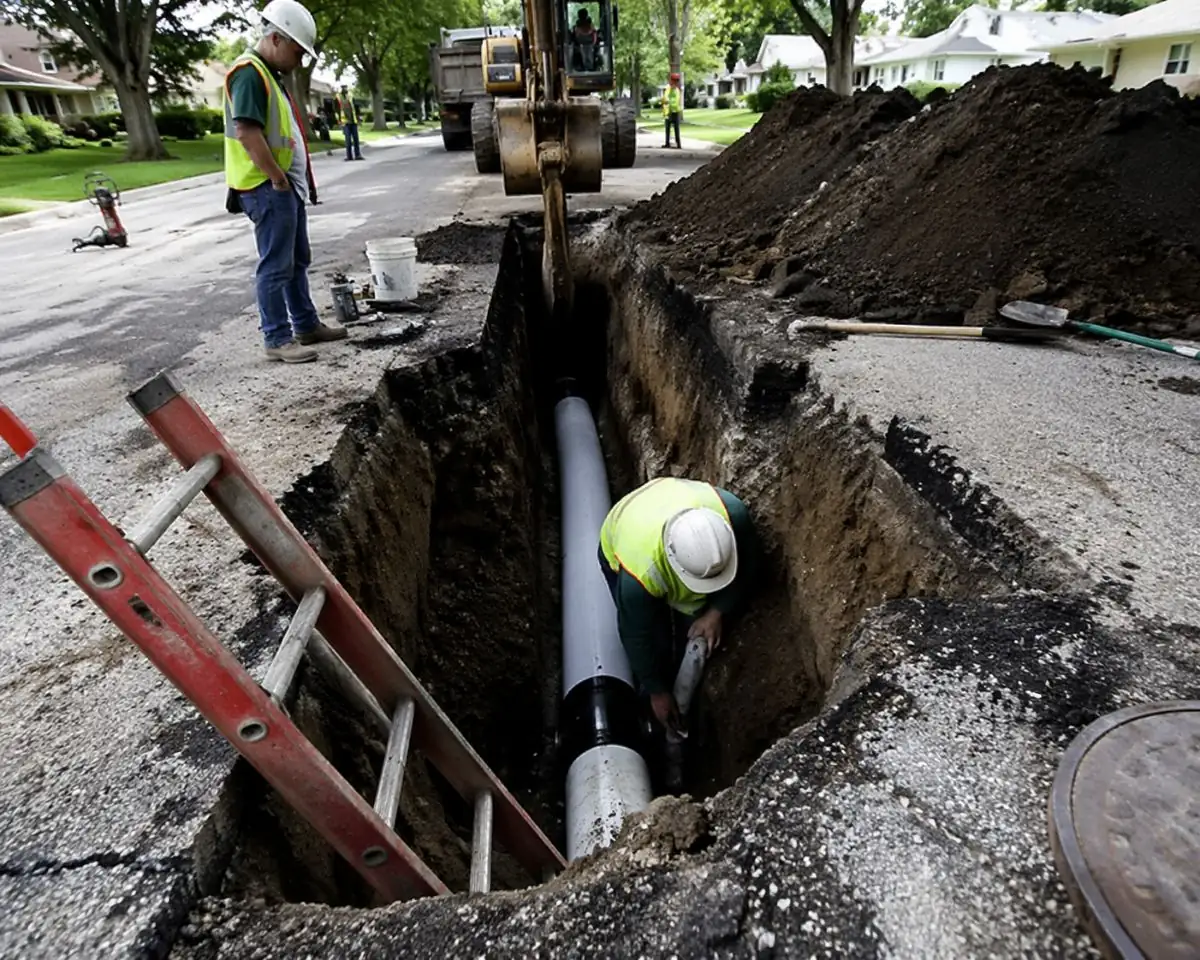
A traditional sewer repair digs a trench along the whole length of the failed pipe, from the house to the city main. Trenchless repair fixes or replaces the same pipe from the ends instead, through a cleanout or a pit about the size of a kitchen table. Everything between the pits stays undisturbed.
Shamrock uses two trenchless methods in the Treasure Valley, and the camera inspection decides which one fits your line. We do not sell a method before we have seen the pipe.
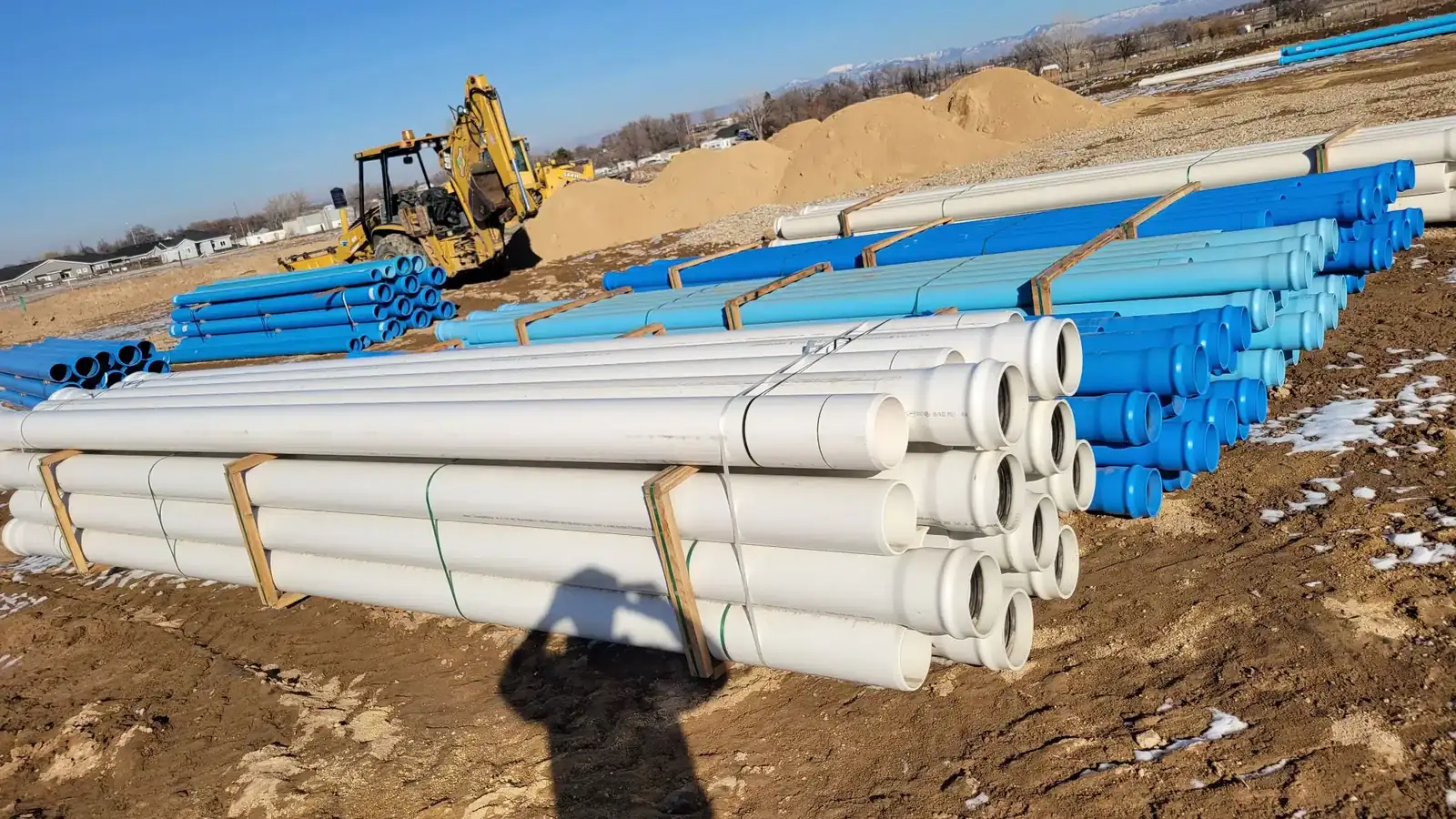
- Pipe bursting: a new HDPE pipe pulled through the path of the old one
- Pipe lining (CIPP): a resin liner cured inside the existing pipe
- Camera inspection and surface locating before any excavation
- Same City of Boise or local sewer permit and inspection as open-cut work
- Access pits backfilled in compacted lifts and restored to grade
Need the full menu, including open-cut and spot repairs? See sewer line repair and replacement in Boise.
Two Methods / 02
Pipe Bursting vs. Pipe Lining: Which One Fits Your Line
Both methods avoid the long trench, but they solve different problems. Here is how we decide between them, and when neither one is the honest answer.
Pipe Lining (CIPP)
A felt or fiberglass liner saturated with resin is pulled or inverted into the old pipe, inflated against the walls and cured in place. The result is a smooth, jointless pipe inside the original. Best for cracked clay or concrete, root intrusion at joints and corroded cast iron where the pipe still holds its round shape. Usually finished in one day through an existing cleanout or a single pit. The liner slightly reduces the inside diameter, which rarely matters on a residential lateral.
Pipe Bursting
A cone-shaped bursting head is pulled by cable or rod through the old pipe from an entry pit to a receiving pit. It fractures the old pipe outward into the surrounding soil while towing a new fused HDPE pipe into the void behind it. Best for crushed, badly offset or Orangeburg lines that cannot be lined, and the only trenchless method that can upsize the pipe. Typically one to two days. Needs two pits and a clear path, so it struggles where the old line runs through heavy cobble or next to other utilities.
When We Dig Instead
Trenchless is a tool, not a promise. A fully collapsed section, a long belly that holds standing water, a joint offset more than the liner or bursting head can pass, or a broken tap at the city main all need open excavation at that spot. Often the answer is a hybrid: dig one short section, then line or burst the rest. We lay out every option in the estimate so you can see what each one saves and costs. Our guide to sewer repair versus replacement explains the tradeoffs in more depth.
Local Conditions / 03
Why Boise Sewer Lines Are Good Candidates for Trenchless
Boise's older neighborhoods, the North End, the Bench, parts of Garden City and downtown Meridian and Nampa, were built on clay, concrete and in some cases Orangeburg sewer laterals that are now well past their design life. These lines sit under mature trees, detached garages, established landscaping and sidewalks the homeowner is responsible for. That is exactly the situation where a trench costs more in restoration than in pipe.
Treasure Valley ground also decides the method. River cobble and gravel near the Boise River can deflect a bursting head, which pushes those jobs toward lining or a short dig. Dense clay in the west valley holds a bore path well and suits bursting. The camera and a surface locate tell us the depth, the material and what the line runs through before we commit to a method.
- Clay, concrete and Orangeburg laterals common in pre-1970s Boise homes
- Homeowner owns the lateral to the main, including under the sidewalk and street
- Mature trees and root intrusion at every joint in older lines
- Cobble near the river, clay to the west: the soil picks the method
- Permits through the City of Boise or the city or sewer district that serves you
Read more on why sewer lines fail in Boise homes and the 7 signs your sewer line needs repair or replacement.
How It Works / 04
What to Expect From a Trenchless Sewer Repair With Shamrock
Trenchless work moves quickly once it starts, so most of the job is in the diagnosis. Here is the sequence from the first call to the restored yard.
1. Camera Inspection and Locate
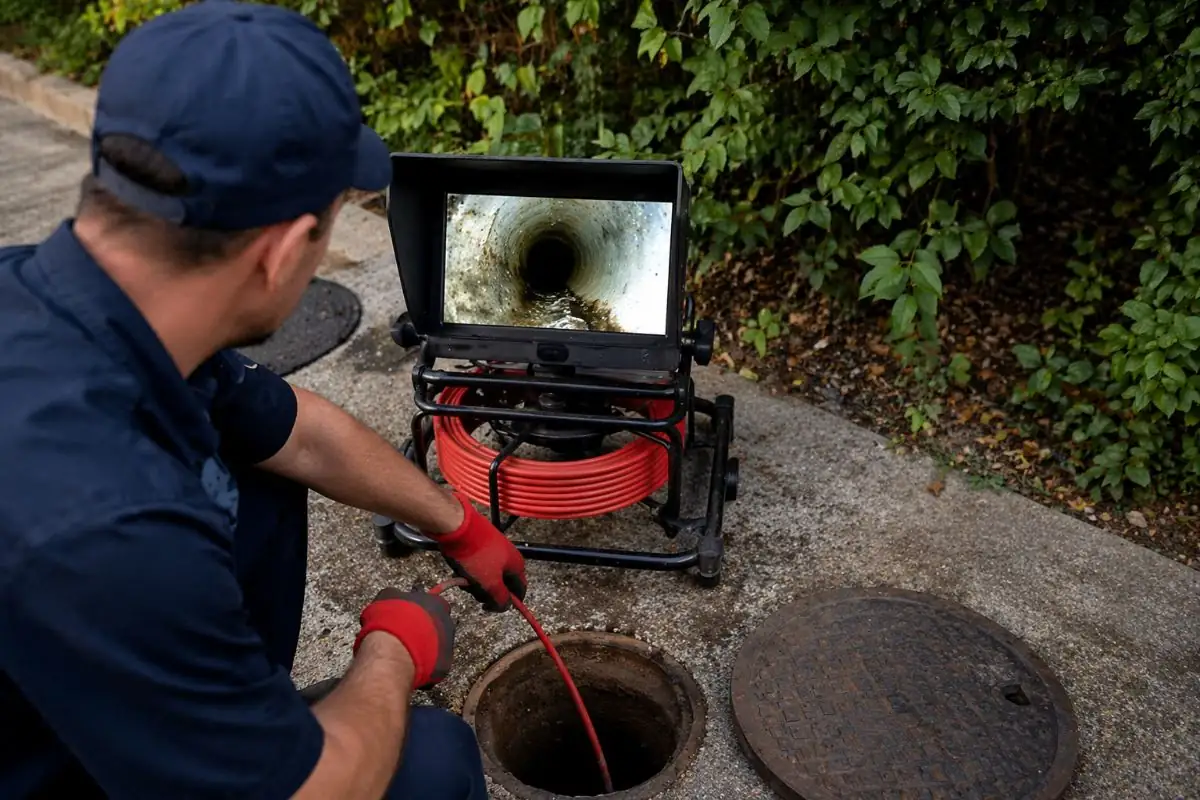
Call (208) 919-4260. We run a camera from the cleanout to the main, record the footage and mark every defect by distance. A surface locator then pins the depth and position of each problem so we know exactly where the access pits go and whether anything between them rules trenchless out.
2. Method and Written Estimate
We walk you through the footage and recommend lining, bursting, a hybrid or open-cut, with the reasoning for each. The written estimate covers permits, locates, pit excavation, materials, the reconnection at the house and the main, inspection and restoration. Estimates are free, and the number holds unless the scope changes.
3. Permit, Pits and the Pull
We pull the sewer permit, call Dig Line 811 and open the access pits. For lining, the pipe is cleaned and descaled, the liner is installed and cured, and the connections are reinstated. For bursting, the new HDPE pipe is fused on site, the bursting head is pulled through and the new line is tied in at both ends. The municipal inspector sees the connections before anything is covered.
4. Backfill, Restore and Review
Pits are backfilled in compacted lifts so they do not settle, then topped with sod, gravel or a concrete patch to match the surroundings. We run a final camera pass, test flow and review the before-and-after footage with you so you know what is under your yard now and where it runs.
Pricing / 05
What Affects the Cost of Trenchless Sewer Repair in Boise
Trenchless is usually compared against the open-cut price, and the comparison only makes sense once restoration is counted. Pulling a new pipe under a driveway costs more per foot than laying one in an open trench, but it costs far less than the trench plus a new driveway, a new patio and a replacement for the maple tree. On a line that runs through open lawn, open-cut can still be the cheaper and better answer.
Every trenchless job starts with a free site visit and camera inspection. The written estimate names the method, the footage, the permit and inspection fees and what restoration is included, so the number you see is the number you pay. We do trenchless sewer work across Boise, Meridian, Eagle, Nampa and the rest of the Treasure Valley. Call (208) 919-4260 or request an estimate online.
- Method: lining, bursting or a hybrid with a short open-cut section
- Length of the run from the cleanout to the city main
- Depth of the line and the access pits, which must reach below the frost line
- Pipe diameter, material and how much cleaning or descaling the old pipe needs before lining
- Number of service connections and reinstatements along the run
- Soil: cobble and river rock near the Boise River slow bursting and pit excavation
- What sits over the pits: lawn, gravel, concrete or asphalt
- Permit and inspection fees, and after-hours emergency response
Common Questions / 06
Trenchless Sewer Repair Questions, Answered
Is trenchless sewer repair possible for every house in Boise?
No, and anyone who tells you otherwise before running a camera is guessing. Pipe lining needs a pipe that still holds its shape so the liner has something to press against. Pipe bursting needs a path the new pipe can follow and room at each end for an entry and receiving pit. A collapsed section, a long belly where the pipe sags and holds water, a badly offset joint or a broken connection at the city main usually means at least part of the line has to be dug. The camera inspection answers the question before any equipment arrives. Our sewer line repair page covers the open-cut options.
What is the difference between pipe lining and pipe bursting?
Pipe lining, often called cured-in-place pipe or CIPP, inserts a resin-soaked liner into the existing pipe through a cleanout or small access pit, then inflates and cures it into a new smooth pipe inside the old one. It fits cracks, root intrusion at joints and minor corrosion. Pipe bursting pulls a bursting head through the old pipe from one pit to another, breaking the old pipe outward while dragging a new high-density polyethylene pipe into the space behind it. It fits pipes that are crushed, badly offset or too far gone to line, and it can upsize the line. Our guide to sewer repair versus replacement walks through how we choose.
Do I still need a permit if nobody is digging a trench?
Yes. Trenchless work still replaces or rehabilitates the sewer lateral, so the City of Boise, Meridian, Eagle, Nampa and the other Treasure Valley jurisdictions require the same sewer permit and inspection as an open-cut job. We pull the permit, schedule the inspection and call Dig Line 811 for utility locates before we open the access pits. The permit fee shows up as a line item on your written estimate.
How long does trenchless sewer repair take?
Most residential lining jobs are finished in a single day, including curing time. Pipe bursting typically runs one to two days, with the second day covering the connection inspection, backfilling the pits and restoring the surface. Weather matters less than with an open trench, but frozen ground in winter can slow pit excavation. Read how long a sewer line replacement takes for a comparison with open-cut timelines.
Will trenchless repair stop tree roots from coming back?
A cured liner has no joints for roots to find, and a new HDPE pipe pulled in by bursting is fused into a single continuous run. Both close the gaps that let roots in. Roots cut out of the old pipe will try to return to the same spot, so the permanent fix is to seal or replace that section rather than cut again every year. Learn more about how tree roots damage sewer lines in the Boise area.
My sewer is backing up right now. Can you do trenchless repair as an emergency?
Call (208) 919-4260 first. Shamrock answers 24 hours a day and will get a crew out to clear the blockage and camera the line at any hour. Whether the permanent fix is trenchless depends on what the camera shows, and we tell you honestly if it can wait until morning. The 24 hour emergency page covers what to do while you wait, and this post walks through the first steps.
Save the Yard
A New Sewer Line Without the Trench
Camera inspection first, then an honest recommendation: lining, bursting or a dig where a dig is the right call. Free estimates and 24 hour emergency response across Boise and the Treasure Valley.