Home / Septic / Septic System Installation
Septic System Installation in Boise, Idaho
New septic systems for new homes, shops and rural lots, and full replacements for systems that have reached the end. We handle the soil evaluation, the health district permit, the excavation and the inspection, start to finish.
New Systems / 01
Septic Installers for New Builds and Replacements
A septic system is a tank and a drain field sized and placed for one specific piece of ground. Get the design right and it works quietly for decades. Get it wrong and it fails in a few years, usually at the drain field, which is the expensive part. Shamrock Construction & Excavation has installed septic systems across the Treasure Valley for over 30 years, from basic gravity systems to complex engineered ones.
We install septic systems for:
- New homes on rural lots and acreage beyond the reach of city sewer
- Shops, barns, guest houses and second dwellings that need their own system or a larger one
- Full system replacement when the tank and the drain field have both failed
- Septic tank replacement: cracked, collapsed or undersized tanks swapped for new concrete or poly
- System upgrades and expansions when bedrooms are added
- Property sales where a failed inspection has to be corrected before closing
Only the drain field giving trouble? See septic drain field repair and replacement. For everything else we do on septic, visit the septic services page.
System Types / 02
Septic Systems We Install
The health district approves the system type based on the soil evaluation. These are the designs that cover nearly every lot in Ada and Canyon counties.
Standard Gravity Systems
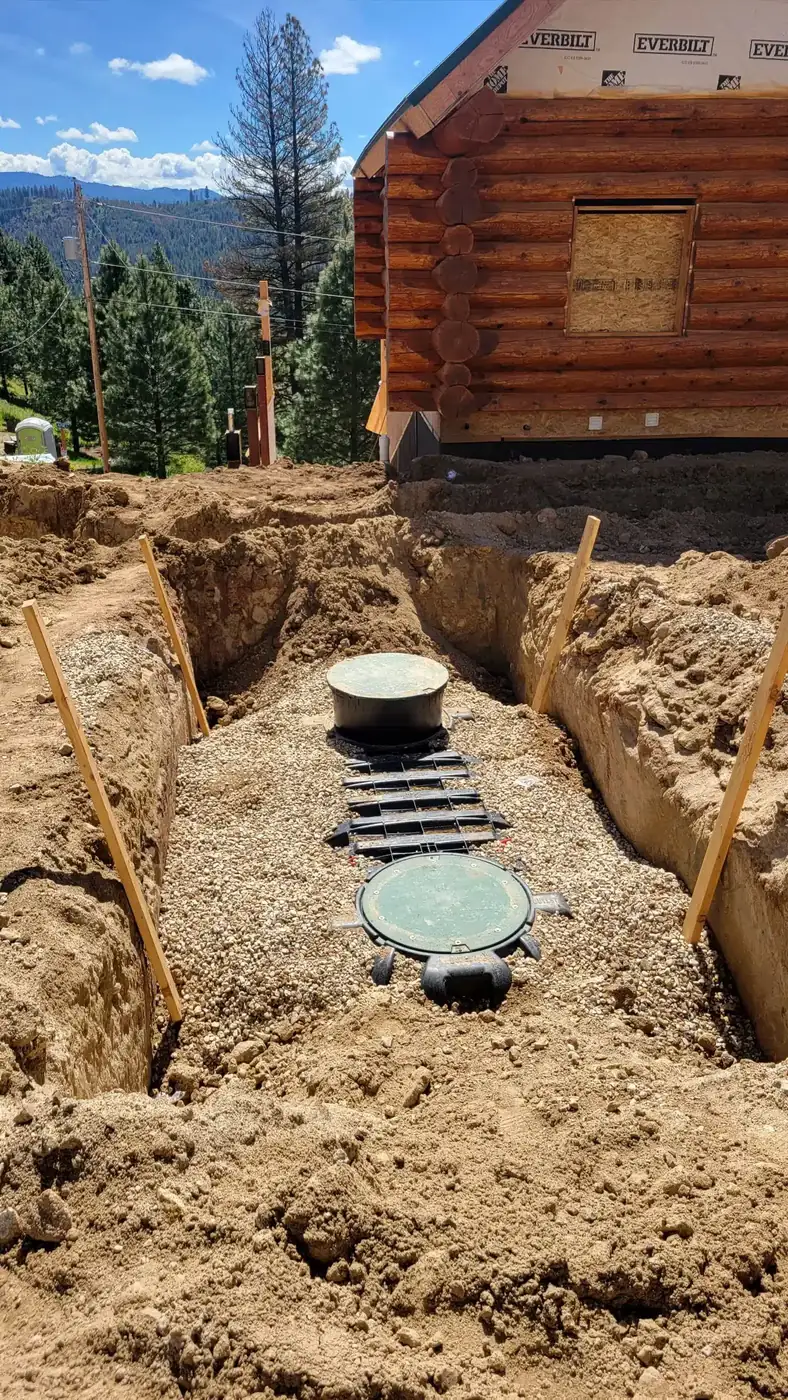
A tank followed by gravel or chamber trenches fed by gravity. This is the simplest design, with no pump and the least to maintain, and it is what most lots with deep, well-drained soil receive. When the ground allows it, this is the system we recommend.
Pressurized Distribution
A pump chamber after the tank doses the drain field through small-diameter pressurized laterals, so effluent is spread evenly across the whole field instead of loading one end. It is used on larger fields, on sloped sites and where the field sits uphill of the tank.
Sand Mounds and Sand Filters
Where groundwater or a restrictive layer is too close to the surface, treatment happens in imported sand: a raised mound built above grade, or a sand filter ahead of the trenches. These are common on ground with a high seasonal water table near canals, the Boise River and flood-irrigated fields.
Extended Treatment Units
Aerobic and other extended treatment package systems clean the wastewater further before it reaches the soil, which lets a smaller field work on a tight or difficult lot. They cost more and need ongoing service, and we say so up front. On some properties they are the only design the district will approve.
Soil, Site and Permits / 03
What Decides the Design of Your Septic System
Septic systems in Idaho are permitted by the regional health district: Central District Health in Ada County and Southwest District Health in Canyon County. Before a permit is issued, the district evaluates the soil in test holes dug on the lot, and that evaluation sets the type of system and the size of the drain field. Most counties here want the septic permit in place before they issue a building permit, so it pays to start early.
The ground changes fast across the valley. Lots around Kuna, Star and the Eagle foothills often have cobble and gravel that drain quickly. Much of Canyon County near Nampa, Caldwell and Middleton is heavier clay with a water table that rises during irrigation season. The same house can need two very different systems a few miles apart.
- Soil evaluation and test holes, dug and coordinated with the health district
- Tank size, set by the number of bedrooms
- Drain field size, set by daily flow and how fast the soil accepts water
- Setbacks to wells, property lines, canals, ditches and buildings
- A designated replacement area reserved for a future drain field
- Tank and lines set deep enough to stay below the frost line
- Finish grade that sheds surface water away from the field
Building from bare ground? We also handle site prep and excavation and water line installation on the same mobilization.
How It Works / 04
What to Expect When Shamrock Installs Your Septic System
Installation follows the health district's process, and the steps below are built around it. Whether the lot is in the Boise foothills or on farm ground in Canyon County, the sequence is the same.
1. Call and Site Visit
Call (208) 919-4260 and we walk the property with you. We look at the house location, the well, the slope, access for equipment and where a tank and field can meet setbacks. For a replacement, we locate the existing tank and lines and find out what has failed and what can stay.
2. Soil Evaluation and Free Written Estimate
We dig the test holes and coordinate the health district's soil evaluation. Once the system type and field size are known, you get a written estimate listing the tank, the drain field, materials, excavation, permit and inspection fees and restoration. Estimates are free, and the number is the number unless the ground or the district changes what has to be built.
3. Permit, Locates and Installation
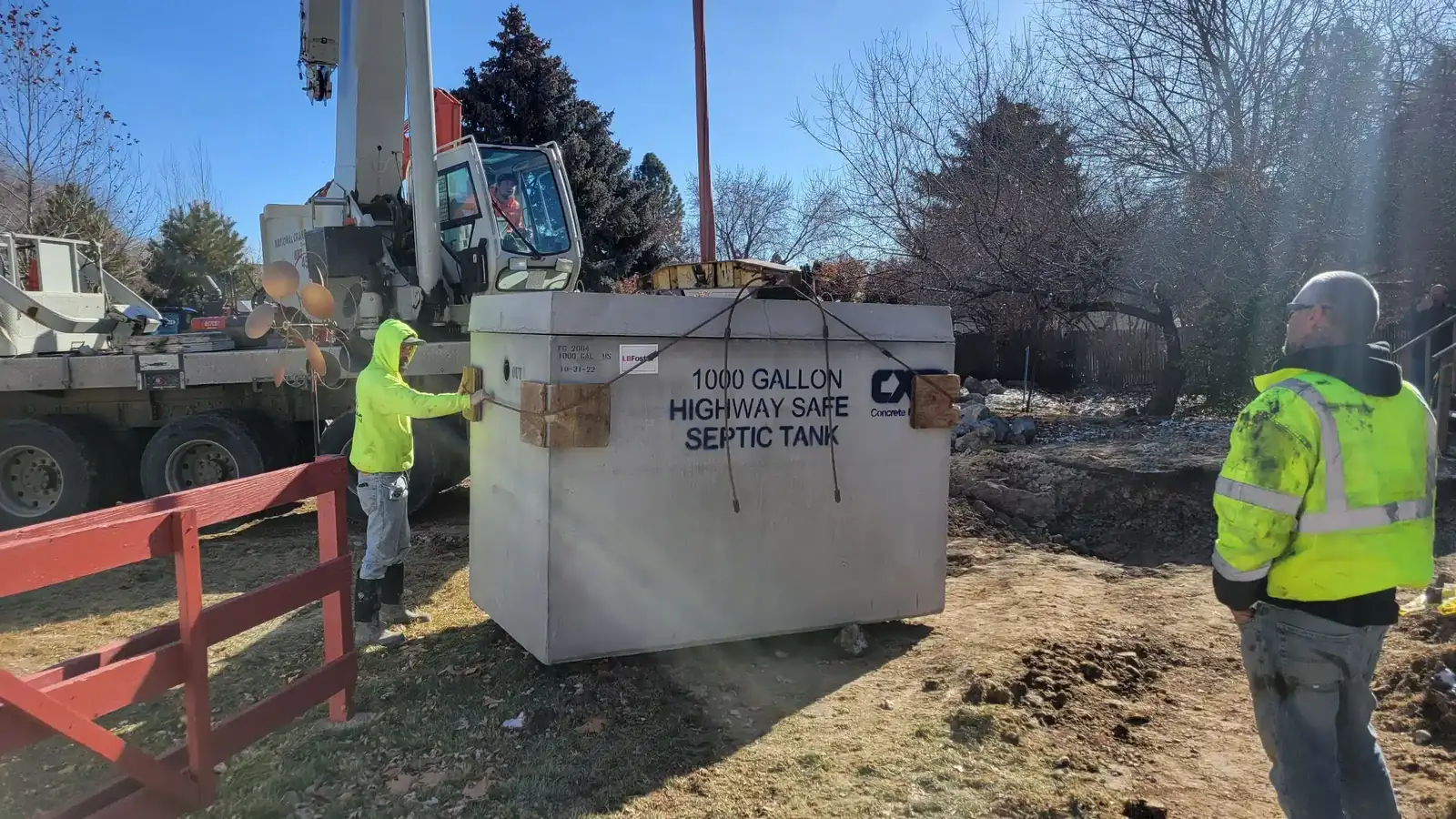
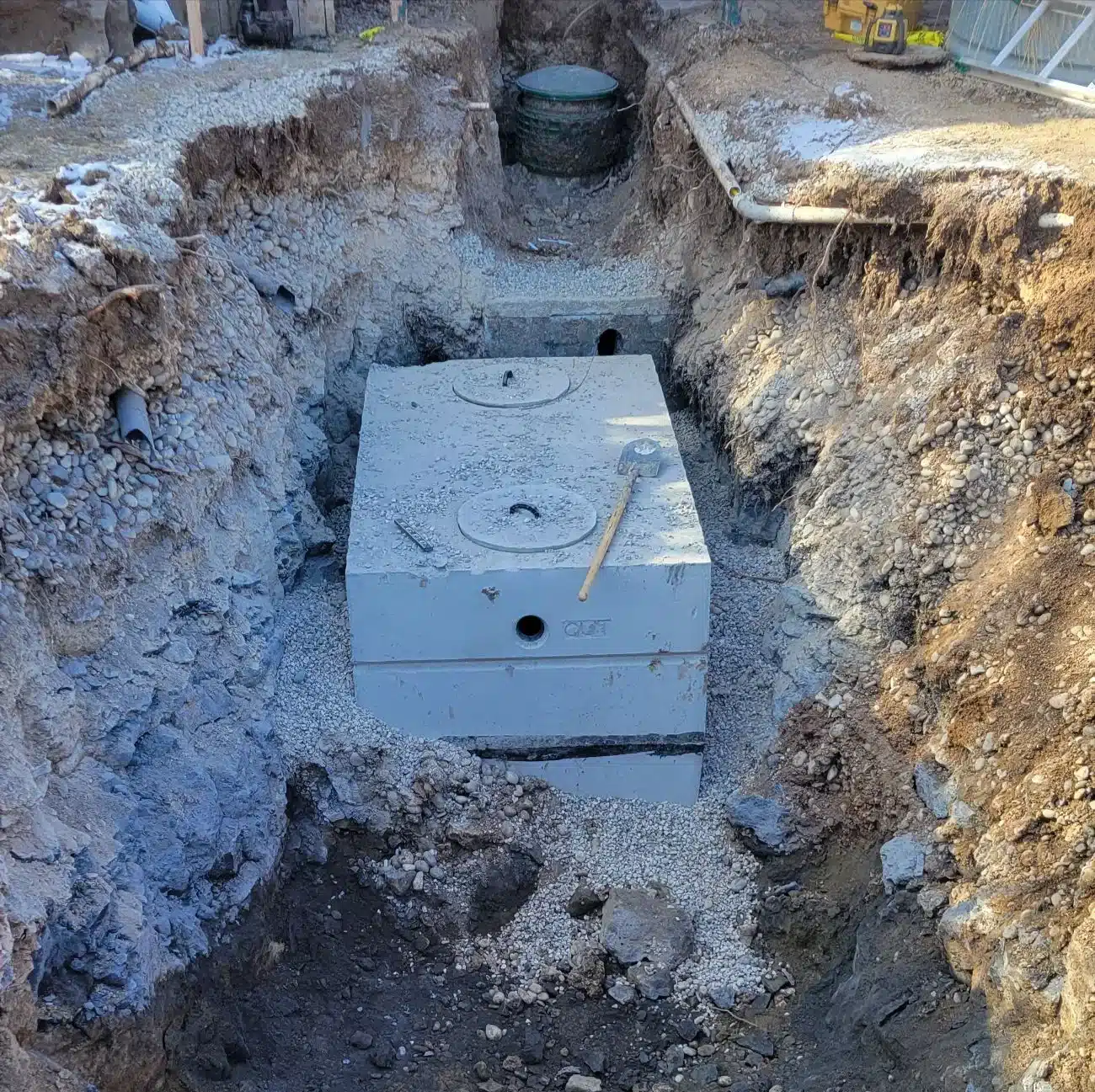
We submit the permit application, call Dig Line 811 for utility locates, then excavate. The tank is set level on a prepared base, the inlet and outlet are piped and sealed, and the drain field is built to the approved depth, spacing and length. Pump chambers, controls and alarms are installed and tested on pressurized systems. The inspector sees the open system before anything is covered.
4. Backfill, Grading and Handover
After the inspection passes we backfill, compact around the tank and grade the surface so water runs away from the field. Risers bring the lids to grade so the tank can be pumped without digging. You get a drawing of where everything sits, plus plain advice on pumping intervals and what you should never flush into a septic system.
Pricing / 05
What Affects the Cost of Septic System Installation in Boise
The cost of a new septic system comes down to what the soil will accept and what the health district will approve. A standard gravity system on well-drained ground is the least expensive to build. Slow clay, a high water table, shallow rock or a tight lot push the design toward a larger field, pressurized distribution, a mound or a treatment unit, and each of those adds cost. That is why an honest number only comes after the soil evaluation.
Every installation gets a free site visit and a written estimate before any work starts. We install across the valley, and each area has its own ground and rules: see septic services in Boise, Meridian, Eagle, Star, Nampa and Caldwell. We also install in Kuna, Middleton and Emmett. Call (208) 919-4260 or request an estimate online.
- System type: gravity, pressurized, sand mound, sand filter or extended treatment
- Tank size and material, concrete or poly
- Drain field size, set by bedrooms and the soil's acceptance rate
- Soil conditions: clay, cobble, shallow rock or a high water table
- New installation vs replacement, including pumping and abandoning the old tank
- Distance from the house to the tank and from the tank to the field
- Pump chamber, controls and electrical on pressurized systems
- Health district permit, soil evaluation and inspection fees
- Access for equipment and restoration of lawn, pasture, driveways and irrigation
Common Questions / 06
Septic Installation Questions, Answered
How long does it take to install a septic system?
The construction itself is quick: most residential systems are excavated, set, piped, inspected and backfilled in two to four working days once the permit is in hand. The calendar time is in the steps before that. The soil evaluation, the design and the health district permit review vary by district and season, so from first call to a working system is usually a few weeks. If you are building, start the septic permit early, because it is commonly needed before a building permit is issued.
Who issues septic permits in the Boise area?
The regional public health district. In Ada County, including Boise, Meridian, Eagle, Star and Kuna, that is Central District Health. In Canyon County, including Nampa, Caldwell and Middleton, it is Southwest District Health. The district evaluates the soil, approves the system type and size, issues the permit and inspects the open installation before it is covered. We handle the application, the paperwork and the inspection scheduling on every job.
What size septic tank do I need?
Tank size is set by the number of bedrooms, because that is how Idaho estimates daily wastewater flow. A 1,000 gallon tank is the usual minimum for a three or four bedroom home, and the size steps up with each additional bedroom. The health district sets the required size on the permit. If you plan to add bedrooms, a shop with a bathroom or a second dwelling later, tell us at the start. It costs far less to size the tank and the drain field for it now than to expand the system afterward.
What type of septic system will my property need?
The soil decides. Deep, well-drained soil with groundwater far below gets a standard gravity system, which is the simplest and least expensive to build. Slow clay, shallow groundwater near canals and the river, shallow rock or a small lot can require pressurized distribution, a sand mound, a sand filter or an extended treatment unit ahead of the drain field. Nobody can tell you for certain until the test holes are dug and the health district has evaluated them. See how soil type in Idaho affects excavation projects.
Can you replace just the septic tank and keep my drain field?
Yes, when the drain field still works. A cracked, collapsed, undersized or badly corroded tank can be replaced on its own and reconnected to the existing field, under a repair permit from the health district. We check the field before recommending that, because a new tank does nothing for a field that has stopped absorbing water. If the field is the problem, see our drain field repair and replacement page.
Should I install a septic system or connect to city sewer?
If a sewer main is available at your property line, the city or sewer district may require you to connect, and that is usually the better long-term choice anyway. Rural lots and most acreage outside city limits do not have that option and need a septic system. We do both: new septic systems, and sewer line installation for septic-to-sewer conversions. Our post on septic tank vs sewer compares the two.
Dependable Septic Work
A Septic System Built for Your Ground
From a gravity system for a new home in Kuna to a full replacement on clay near Caldwell, we handle the soil evaluation, the permit, the installation and the inspection. Serving Boise, Meridian, Eagle, Star, Kuna, Nampa, Caldwell, Middleton, Emmett and all of Southwest Idaho.